How to Read a Window Energy Label: U-Factor, SHGC, and NFRC Ratings Explained for Tyler, Texas Homeowners
If you’ve ever stared at a window energy label and felt like you accidentally enrolled in a college physics course, you are not alone. Between U-Factor, SHGC, VT, air leakage, condensation resistance, and that official-looking NFRC logo, the whole thing can feel like a secret code written by people who really, really enjoy decimals. The good news? Once you know what each number means, it becomes much easier to choose energy efficiency upgrades, compare replacement windows, and start saving money on energy bills in Tyler, Texas.
Table of Contents
- What Is a Window Energy Label and Why Should Tyler Homeowners Care?
- What Are NFRC Ratings on Replacement Windows?
- What Does U-Factor Mean for Energy Efficiency?
- What Is SHGC and Why Does It Matter in Tyler, Texas?
- What Other Window Label Ratings Should You Know?
- How Do You Compare Replacement Windows Using Energy Labels?
- What Are Signs It’s Time to Replace Your Windows in Tyler, Texas?
- What Are Triple Pane Windows Benefits for Tyler, Texas Homes?
- Why Do Made in the USA Windows Matter Locally?
- How Can Local Window Replacement Help with Saving Money on Energy Bills?
- FAQ: Window Energy Labels and Replacement Windows in Tyler, Texas
- Ready to Make Sense of Window Ratings Near You?
Here in Tyler, Texas, our homes deal with blazing summer heat, sticky humidity, sudden cold snaps, and enough pollen to make your porch furniture look like it has been dusted with yellow cake mix. So when you’re shopping for new windows, that little energy label is more than a sticker. It’s a cheat sheet for comfort, utility bills, and long-term value.
At Window Depot USA of Tyler, TX, we talk with local homeowners all the time who want better-performing windows but don’t necessarily want to become building science experts. Fair. You’ve got other things to do, like enjoying a weekend at Tyler State Park, keeping up with yard work, or deciding where to get tacos after church.
This guide breaks down the important numbers on a window energy label in plain English. We’ll cover U-Factor, SHGC, NFRC ratings, and how those numbers affect your home in East Texas. No lab coat required.
Before we get rolling, here’s the big-picture version: a window label tells you how well that window insulates, how much solar heat it lets in, how much visible light comes through, and how much air may leak around the unit. All of that matters when your air conditioner is already working overtime in July.
Energy performance is especially important in Tyler neighborhoods where homes vary widely in age and construction style. A newer home in South Tyler may have different needs than an older house near Azalea District, but both can benefit from choosing the right replacement windows.
And yes, there are a lot of numbers. But after a few minutes, you’ll know which ones matter most for local homes, which ones are worth comparing closely, and which ones you can file under “nice to know but not worth losing sleep over.”
Think of the energy label like a nutrition facts panel. Except instead of telling you how many calories are in a cookie, it tells you whether your home is about to feel like a toaster oven every afternoon.

What Is a Window Energy Label and Why Should Tyler Homeowners Care?
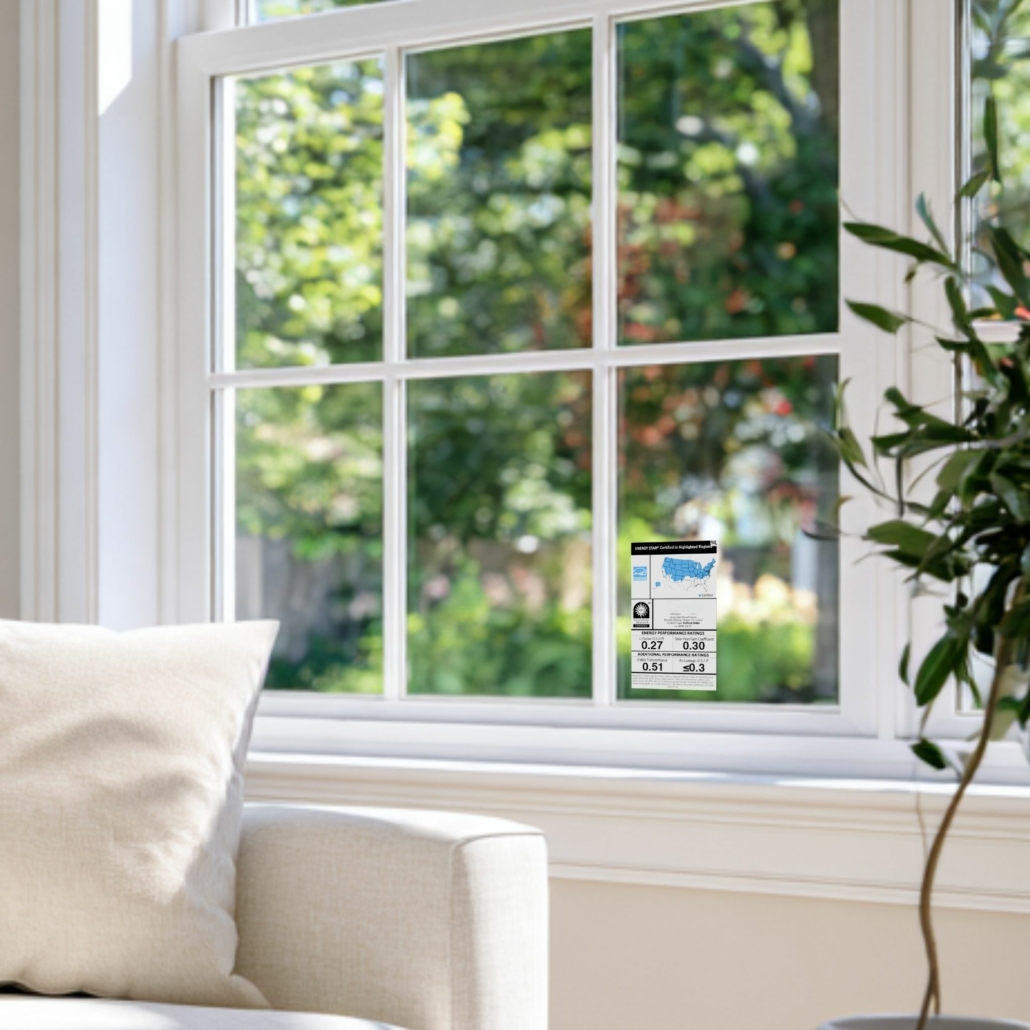
A window energy label is the standardized information sticker that helps homeowners compare products based on performance. The most important labels you’ll typically see are from the NFRC, which stands for the National Fenestration Rating Council. “Fenestration” is the fancy industry word for windows, doors, and skylights. It sounds like something you’d need a prescription for, but thankfully it is much simpler than that.
The label gives you independent ratings for different parts of window performance. That matters because not all products are created equal, and two windows that look similar from across the room can perform very differently once they are installed.
For homeowners in Tyler, Texas, the label can help answer questions like:
- Will this window help keep summer heat outside?
- Will my rooms feel less drafty in winter?
- Can this help with saving money on energy bills?
- How does this product compare with another option?
- Is this a good fit for our East Texas climate?
According to the U.S. Department of Energy, heat gain and heat loss through windows are responsible for 25% to 30% of residential heating and cooling energy use. That is a big chunk of your utility bill sneaking through the glass, frame, and seals. Rude, honestly.
That statistic is why energy efficiency is such a big deal when you’re considering replacement windows. Choosing the right product can improve comfort and help reduce wasted heating and cooling energy, especially in a climate like Tyler’s where cooling costs can climb fast.
What Are NFRC Ratings on Replacement Windows?
NFRC ratings are independent performance ratings that make it easier to compare replacement windows. The NFRC does not sell windows, install windows, or recommend one brand over another. Its job is to create fair, standardized testing so homeowners can make informed choices.
That standardized testing is important. Without it, comparing window claims would be like comparing barbecue restaurants using only the phrase “pretty good.” Around here, that’s not nearly specific enough.
When you see an NFRC label, you can feel more confident that the ratings come from a consistent testing process. The label usually includes several numbers, including:
- U-Factor
- Solar Heat Gain Coefficient, also called SHGC
- Visible Transmittance, often listed as VT
- Air Leakage, sometimes listed as AL
- Condensation Resistance, often listed as CR
These ratings help you see beyond sales language and compare real performance. That’s especially useful when shopping for windows near you because one product may be better suited for Tyler’s heat and humidity than another.
How Is the NFRC Label Different from ENERGY STAR?
NFRC and ENERGY STAR are related but not the same thing. NFRC provides the performance ratings. ENERGY STAR uses those ratings to determine whether a product meets certain energy efficiency guidelines for a particular climate zone.
Here’s the simple version:
- NFRC label: Gives you the tested numbers.
- ENERGY STAR certification: Tells you whether the product meets efficiency standards for your region.
So if NFRC is the report card, ENERGY STAR is like the honor roll. Both are useful, but the NFRC label gives you the actual grades in each subject.
What Does U-Factor Mean for Energy Efficiency?
U-Factor measures how well a window prevents heat from passing through it. More specifically, it measures heat transfer. The lower the U-Factor, the better the window insulates.
This can feel backward at first because we’re often trained to think higher numbers are better. Bigger burger, bigger truck, bigger fishing story. But with U-Factor, lower is better.
A window with a lower U-Factor helps reduce unwanted heat loss during cooler months and can also help with overall comfort year-round. In Tyler, our winters may not be Minnesota-level dramatic, but we still get cold mornings, north winds, and those days when everyone suddenly remembers where they stored their jackets.
Why Does U-Factor Matter in Tyler, Texas?
Many Tyler homeowners focus mostly on summer cooling, and that makes sense. However, insulation still matters. A better-insulated window helps stabilize indoor temperatures so your HVAC system does not have to work as hard during hot or cold weather.
For energy efficiency, U-Factor is one of the first numbers you should compare. If your current windows are older, single-pane, poorly sealed, or just tired from decades of East Texas weather, upgrading to modern replacement windows with a strong U-Factor may lead to better comfort throughout the house.
Here’s the everyday example: if you sit near a window in winter and feel a chilly “ghost breeze,” that window may have poor insulation, air leakage, or both. If you sit near it in summer and feel like the sun has personally chosen you as its target, U-Factor and SHGC may both be part of the conversation.
What Is a Good U-Factor?
A “good” U-Factor depends on your climate, window style, glass package, and goals. However, lower U-Factors usually mean better insulation. Double-pane windows often perform much better than older single-pane windows, while triple pane windows can offer even stronger insulating performance.
When comparing products, don’t look at U-Factor alone. It is important, but it works together with SHGC, air leakage, and installation quality. A high-performance product installed poorly is like buying a premium cooler and leaving the lid open.
What Is SHGC and Why Does It Matter in Tyler, Texas?
SHGC stands for Solar Heat Gain Coefficient. This rating measures how much solar heat passes through a window. The lower the SHGC, the less solar heat gets inside.
In Tyler, Texas, SHGC is a major number to watch because our summers are no joke. If you’ve ever opened your front door in August and felt like you walked into soup, you already understand why controlling solar heat matters.
A lower SHGC can help reduce heat gain from direct sunlight. That can be especially helpful for rooms with west-facing or south-facing windows, where afternoon sun can turn a living room into a greenhouse with throw pillows.
How Does SHGC Affect Saving Money on Energy Bills?
When windows allow too much solar heat inside, your air conditioner has to work harder to keep your home comfortable. That extra workload may contribute to higher cooling costs. Choosing replacement windows with an appropriate SHGC can support saving money on energy bills by reducing unwanted heat gain.
In hot climates like East Texas, many homeowners prefer windows with lower SHGC ratings. This does not mean you want a house that feels cave-like. It means you want glass that helps block unwanted heat while still allowing natural light.
That balance is especially important in family rooms, kitchens, home offices, and bedrooms where comfort matters throughout the day. After all, nobody wants to attend a Zoom meeting while slowly melting next to a sunny window.
Should Every Tyler Home Choose the Lowest SHGC?
Not always. Lower SHGC is often helpful in warm climates, but the right number depends on the orientation of your home, shade trees, roof overhangs, glass area, and personal preferences. A local window replacement expert can help you compare options based on your actual home, not a generic chart from somewhere with four mild seasons and suspiciously low humidity.
For example, a heavily shaded home in a wooded area may have different needs than a home with large west-facing windows and no mature trees. This is where local knowledge really matters.
What Other Window Label Ratings Should You Know?
U-Factor and SHGC are usually the big two, but they are not the only ratings on a window energy label. A few other numbers can help you understand comfort, light, drafts, and condensation.
What Is Visible Transmittance or VT?
Visible Transmittance, or VT, measures how much visible light passes through the window. A higher VT means more daylight enters your home.
If you love bright, cheerful rooms, VT matters. If your home already feels dim, you may not want to choose a glass package that blocks too much visible light. The goal is to reduce heat gain without making your living room feel like a medieval castle.
In Tyler homes, it’s common to want plenty of natural light while still managing heat. That is why modern low-E glass coatings are so useful. They can help reflect infrared heat while allowing visible light through, depending on the product design.
What Is Air Leakage or AL?
Air Leakage measures how much air passes through a window assembly. Lower air leakage ratings generally mean fewer drafts and better comfort.
This number is important because even a window with great glass can underperform if air moves around it. Drafts may come from old frames, worn weatherstripping, poor installation, or house settling.
In a windy rainstorm, poor air sealing can quickly become more than a comfort issue. It can affect moisture control, indoor comfort, and HVAC performance. For local window replacement in Tyler, installation quality is just as important as product quality.
What Is Condensation Resistance or CR?
Condensation Resistance indicates how well a window resists condensation forming on the interior surface. Higher numbers generally mean better resistance.
Condensation can happen when warm, humid indoor air meets a cold glass surface. In East Texas, where humidity likes to make itself at home, condensation resistance may be worth considering.
That said, window condensation can also be affected by indoor humidity levels, ventilation, cooking, showers, and even how many houseplants you have. If your living room looks like a greenhouse, your windows may not be the only thing contributing to moisture.
How Do You Compare Replacement Windows Using Energy Labels?
To compare replacement windows, start by looking at the NFRC label and focusing on the ratings that matter most for your climate and priorities. In Tyler, Texas, that usually means paying close attention to U-Factor, SHGC, and air leakage.
Here is a simple way to read the label without needing a calculator, spreadsheet, or emergency coffee refill:
- Step 1: Check the U-Factor. Lower means better insulation.
- Step 2: Check the SHGC. Lower means less solar heat enters the home.
- Step 3: Check VT. Higher means more natural light.
- Step 4: Check air leakage. Lower generally means fewer drafts.
- Step 5: Ask about installation. Even great ratings need proper installation.
The trick is to avoid choosing based on one number alone. A window is a complete system: glass, spacer, frame, sash, locks, weatherstripping, and installation. If one part underperforms, the whole system can suffer.
What Is the Best Window Rating for Energy Efficiency?
The best window rating for energy efficiency depends on your home’s layout and your goals. For many homeowners in Tyler, a strong combination includes a low U-Factor, a lower SHGC, good air leakage performance, and professional installation.
For example, if your primary concern is a hot bonus room or west-facing bedroom, SHGC may be a major factor. If your home feels drafty during winter, U-Factor and air leakage may be top priorities. If your utility bills make you wince like you just stepped on a Lego, all of the above may matter.
At Window Depot USA of Tyler, TX, we help homeowners compare products in plain language. That way, you can make a confident choice without memorizing industry acronyms.
Why Does Installation Matter as Much as the Label?
A window energy label tells you how the product performed in standardized testing. But your home is not a laboratory. It has existing framing, siding, trim, settling, moisture conditions, and maybe a dog who barks at the installer’s ladder. Real life is messier than a test chamber.
Proper installation helps protect the performance you paid for. Poor installation can lead to drafts, water intrusion, sticking sashes, or reduced energy efficiency. In other words, the label matters, but the crew matters too.
What Are Signs It’s Time to Replace Your Windows in Tyler, Texas?
Sometimes the window label matters because you’re actively shopping. Other times, your old windows are dropping hints that are about as subtle as a marching band in your hallway.
Here are common signs it may be time to consider replacement windows in Tyler, Texas:
- Your rooms feel hot in summer even when the AC is running.
- You notice drafts near closed windows.
- Your energy bills have increased without a clear reason.
- Window frames are warped, soft, rotting, or damaged.
- You see fogging or moisture between glass panes.
- Windows are difficult to open, close, or lock.
- Outdoor noise seems louder than it should.
- You still have older single-pane windows.
- You feel temperature swings from room to room.
In Tyler, older homes may have charming character, big trees, pretty brickwork, and windows that have been doing their best since shoulder pads were in style. If your windows are past their prime, replacing them can improve comfort, curb appeal, security, and energy efficiency.
Can New Windows Help with Comfort in East Texas Weather?
Yes, new windows can help improve comfort by reducing drafts, limiting unwanted solar heat, and providing better insulation. This is especially helpful in Tyler’s hot, humid climate where your cooling system works hard for much of the year.
The right replacement windows can also help even out room temperatures. That matters if one bedroom feels like an icebox while another feels like a sauna. A better window package can reduce those uncomfortable extremes.
What Are Triple Pane Windows Benefits for Tyler, Texas Homes?
Triple pane windows include three panes of glass instead of one or two. The extra pane creates additional insulating space, which can help improve thermal performance, reduce noise, and increase comfort.
For Tyler homeowners, triple pane glass may be worth considering if you want a higher-performance window solution. These products can be especially helpful for rooms with lots of sun exposure, spaces near busy roads, or homes where comfort is the top priority.
Some homeowners ask whether triple pane windows are “too much” for Texas. The better question is what you want your windows to do. If your goal is stronger insulation, improved comfort, and better overall performance, triple pane options may be a smart choice.
How Do Triple Pane Windows Affect U-Factor?
Triple pane windows often have lower U-Factors than comparable double-pane windows because the additional pane and insulating gas fills can slow heat transfer. Lower U-Factor means better insulation, which supports energy efficiency.
This can help your home feel more comfortable during both summer and winter. Even though Tyler is known more for heat than cold, better insulation still helps reduce the workload on your HVAC system.
Can Triple Pane Windows Help Reduce Noise?
Yes, triple pane windows may help reduce outside noise compared to older or less efficient windows. If you live near a busy road, school, commercial area, or that one neighbor who treats Saturday morning like leaf blower practice time, improved window construction can be a welcome upgrade.
Noise reduction depends on the full window design, glass thickness, air spaces, frame, and installation, but many homeowners notice a quieter indoor environment after upgrading.
Are Triple Pane Windows Worth It Near You?
For many local homeowners, triple pane windows are worth considering if comfort, performance, and long-term value are priorities. They may cost more than standard options, but they can provide upgraded energy efficiency and indoor comfort.
The best way to know is to compare products, ratings, and installation options with a local expert who understands Tyler homes and weather patterns.
Why Do Made in the USA Windows Matter Locally?
Made in the USA windows matter because they can support quality control, reliable sourcing, local and national jobs, and products designed for American homes and climates. For homeowners in Tyler, Texas, that can mean greater confidence in the product you’re installing in your home.
When you invest in replacement windows, you are not buying something you plan to swap out like seasonal décor. Good windows are a long-term home improvement. Choosing products made in the USA can provide peace of mind that the manufacturing standards, supply chain, and service support are closer to home.
There is also something satisfying about investing in American-made products for your East Texas home. It just feels right, like sweet tea in a mason jar or waving at someone from the truck even if you only sort of know them.
Do Made in the USA Windows Improve Energy Efficiency?
The country of manufacture alone does not determine energy efficiency. The actual performance ratings do. However, high-quality Made in the USA windows can offer strong U-Factor, SHGC, air leakage, and durability features when built with modern materials and technology.
That is why you should still read the NFRC label. American-made is a great benefit, but the ratings show you how the product performs.
Why Does Local Service Matter After Installation?
Local service matters because questions, warranty issues, adjustments, and future projects are easier when you have a team near you. Window Depot USA of Tyler, TX serves homeowners in Tyler, Texas and surrounding East Texas communities with local knowledge and support.
When your installer understands local climate issues like heavy rain, humidity, high heat, and seasonal storms, they can better recommend products and installation practices that fit your home.
How Can Local Window Replacement Help with Saving Money on Energy Bills?
Local window replacement can help with saving money on energy bills by reducing drafts, improving insulation, limiting solar heat gain, and helping your HVAC system work more efficiently. The exact results vary by home, but the right upgrades can make a noticeable difference in comfort and performance.
In Tyler, air conditioning is a major part of household energy use for much of the year. If your current windows allow too much heat inside, your AC may run longer and harder. That can affect both comfort and utility costs.
Choosing energy-efficient products with appropriate U-Factor and SHGC ratings is one part of the solution. Choosing professional local installation is the other part. Together, they help create a better building envelope, which is the barrier between your indoor comfort and whatever East Texas weather has planned today.
What Should You Look for When Buying New Windows Near You?
When choosing where to buy new windows near you, look for a company that offers clear product information, strong energy efficiency options, professional installation, financing options if needed, and local service after the sale.
You should also ask questions like:
- Are the windows NFRC rated?
- What U-Factor and SHGC do you recommend for my home?
- Are the products Made in the USA?
- Do you offer triple pane options?
- Who handles the installation?
- What warranties are available?
- Can you explain the estimate in plain English?
If a company dodges basic questions, uses confusing pressure tactics, or acts like you should already know all the acronyms, that is your cue to keep shopping. Buying replacement windows should not feel like a pop quiz.
What Makes Window Depot USA of Tyler, TX Different?
Window Depot USA of Tyler, TX combines national buying power with local service. That means Tyler homeowners can get access to quality window products while working with a team that understands local homes, neighborhoods, and weather.
We focus on helping you choose the right solution, not just throwing technical terms at you until you nod politely. Whether you are upgrading a few drafty openings or planning a whole-home project, we can walk you through your options and explain what the ratings mean for your home.
And because we work locally in Tyler, Texas, we understand what matters here: heat control, energy efficiency, curb appeal, durability, and making sure your home feels comfortable when summer is doing its absolute most.
FAQ: Window Energy Labels and Replacement Windows in Tyler, Texas
How often should I replace windows in Tyler, Texas?
Answer: Many windows last 15 to 30 years depending on material, installation, maintenance, and weather exposure. In Tyler, heat, humidity, storms, and sun exposure can shorten performance life. If your windows are drafty, foggy, hard to operate, or causing comfort issues, it may be time to compare replacement windows.
What is the most important window rating for Tyler homeowners?
Answer: U-Factor and SHGC are both very important. U-Factor measures insulation, while SHGC measures solar heat gain. In Tyler’s warm climate, a lower SHGC is often helpful for reducing heat from sunlight and supporting energy efficiency.
What does a lower U-Factor mean?
Answer: A lower U-Factor means the window insulates better and slows heat transfer. This can improve comfort in both hot and cool weather and may support saving money on energy bills.
What does SHGC mean on a window label?
Answer: SHGC stands for Solar Heat Gain Coefficient. It measures how much solar heat passes through the window. A lower SHGC means less solar heat enters your home, which is helpful during hot Tyler summers.
Are triple pane windows good for Tyler, Texas homes?
Answer: Yes, triple pane windows can be a strong option for Tyler homeowners who want upgraded insulation, comfort, and noise reduction. They may be especially useful in sunny rooms, busy neighborhoods, or homes where energy efficiency is a priority.
Do new windows really help with saving money on energy bills?
Answer: New energy-efficient windows can help reduce wasted heating and cooling energy, especially if your current windows are old, drafty, or single-pane. Actual savings vary by home, product, installation, and energy use.
Should I choose ENERGY STAR windows in Tyler, Texas?
Answer: ENERGY STAR certified windows can be a good choice because they meet energy performance guidelines for your climate zone. You should still review the NFRC ratings to compare U-Factor, SHGC, and air leakage.
Can window labels tell me which window is best?
Answer: Window labels help you compare performance, but the “best” window depends on your home, budget, style preferences, sun exposure, and comfort goals. A local expert can help you match the ratings to your specific needs.
Ready to Make Sense of Window Ratings Near You?
Reading a window energy label does not have to be intimidating. Once you understand U-Factor, SHGC, NFRC ratings, VT, air leakage, and condensation resistance, you can compare products with much more confidence.
For Tyler, Texas homeowners, the big takeaway is simple: choose replacement windows designed for local heat, humidity, and comfort needs. Look for strong energy efficiency ratings, ask about Made in the USA options, consider triple pane windows if you want upgraded performance, and make sure your windows are installed by a qualified local team.
Window Depot USA of Tyler, TX is here to help you decode the labels, compare your options, and choose windows that make sense for your home. No confusing jargon. No mystery numbers. Just honest guidance and quality products for East Texas homeowners.
Contact Window Depot USA of Tyler, TX today for your free quote.